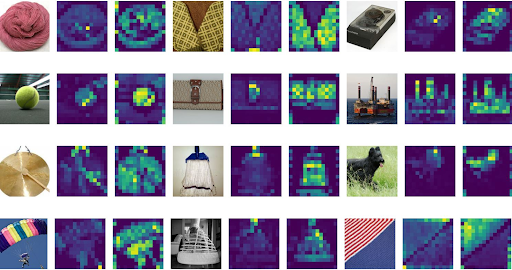
With researchers aiming to unify visual generation and understanding into a single framework, multimodal artificial intelligence is evolving rapidly. Traditionally, these two domains have been treated separately due to their distinct requirements. Generative models focus on producing fine-grained image details while understanding models prioritize high-level semantics. The challenge lies in integrating both capabilities effectively without…
Designing imitation learning (IL) policies involves many choices, such as selecting features, architecture, and policy representation. The field is advancing quickly, introducing many new techniques and increasing complexity, making it difficult to explore all possible designs and understand their impact. IL enables agents to learn through demonstrations rather than reward-based approaches. The increasing number of…
1. Introduction
Ever since the introduction of the self-attention mechanism, Transformers have been the top choice when it comes to Natural Language Processing (NLP) tasks. Self-attention-based models are highly parallelizable and require substantially fewer parameters, making them much more computationally efficient, less prone to overfitting, and easier to fine-tune for domain-specific tasks [1]. Furthermore, the…
Modern vision-language models have transformed how we process visual data, yet they often fall short when it comes to fine-grained localization and dense feature extraction. Many traditional models focus on high-level semantic understanding and zero-shot classification but struggle with detailed spatial reasoning. These limitations can impact applications that require precise localization, such as document analysis…
Since the launch of the Gemini 2.0 Flash model family, developers are discovering new use cases for this highly efficient family of models. Gemini 2.0 Flash offers stronger performance over 1.5 Flash and 1.5 Pro, plus simplified pricing that makes our 1 million token context window more affordable. Today, Gemini 2.0 Flash-Lite is now generally…
Imagine you’re building your dream home. Just about everything is ready. All that’s left to do is pick out a front door. Since the neighborhood has a low crime rate, you decide you want a door with a standard lock — nothing too fancy, but probably enough to deter 99.9% of would-be burglars.
Unfortunately, the local homeowners’…
Multimodal AI agents are designed to process and integrate various data types, such as images, text, and videos, to perform tasks in digital and physical environments. They are used in robotics, virtual assistants, and user interface automation, where they need to understand and act based on complex multimodal inputs. These systems aim to bridge verbal…
Previously we discussed applying reinforcement learning to Ordinary Differential Equations (ODEs) by integrating ODEs within gymnasium. ODEs are a powerful tool that can describe a wide range of systems but are limited to a single variable. Partial Differential Equations (PDEs) are differential equations involving derivatives of multiple variables that can cover a far broader range…
Open-vocabulary object detection (OVD) aims to detect arbitrary objects with user-provided text labels. Although recent progress has enhanced zero-shot detection ability, current techniques handicap themselves with three important challenges. They heavily depend on expensive and large-scale region-level annotations, which are hard to scale. Their captions are typically short and not contextually rich, which makes them…