
Computer vision moved fast in 2025: new multimodal backbones, larger open datasets, and tighter model–systems integration. Practitioners need sources that publish rigorously, link code and benchmarks, and track deployment patterns—not marketing posts. This list prioritizes primary research hubs, lab blogs, and production-oriented engineering outlets with consistent update cadence. Use it to monitor SOTA shifts, grab…
Optical Character Recognition (OCR) is the process of turning images that contain text—such as scanned pages, receipts, or photographs—into machine-readable text. What began as brittle rule-based systems has evolved into a rich ecosystem of neural architectures and vision-language models capable of reading complex, multi-lingual, and handwritten documents.
How OCR Works?
Every OCR system tackles three…
Introduction
Vision Language Models (VLMs) allow both text inputs and visual understanding. However, image resolution is crucial for VLM performance for processing text and chart-rich data. Increasing image resolution creates significant challenges. First, pretrained vision encoders often struggle with high-resolution images due to inefficient pretraining requirements. Running inference on high-resolution images increases computational costs and…
Introduction
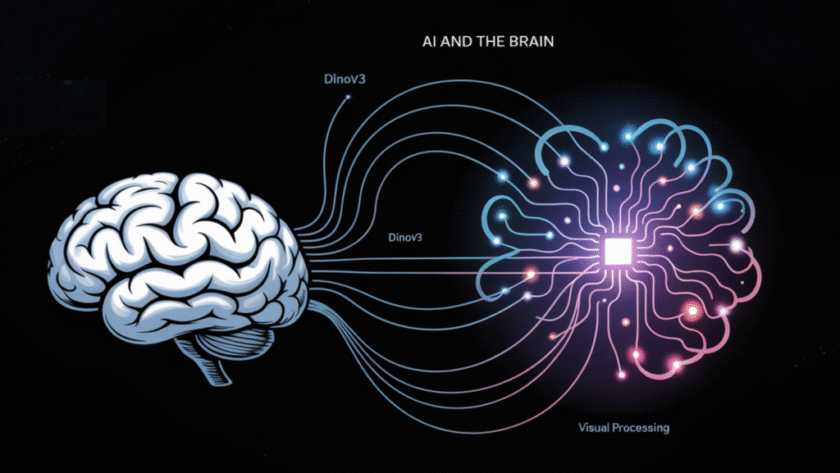
Understanding how the brain builds internal representations of the visual world is one of the most fascinating challenges in neuroscience. Over the past decade, deep learning has reshaped computer vision, producing neural networks that not only perform at human-level accuracy on recognition tasks but also seem to process information in ways that resemble our…
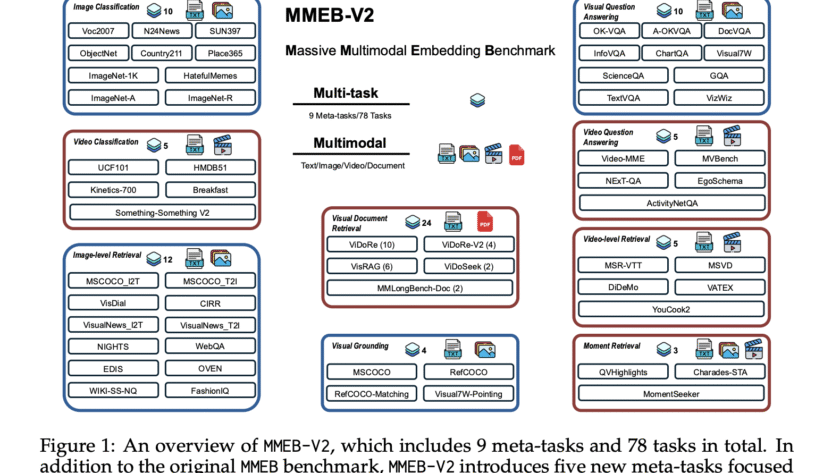
Embedding models act as bridges between different data modalities by encoding diverse multimodal information into a shared dense representation space. There have been advancements in embedding models in recent years, driven by progress in large foundation models. However, existing multimodal embedding models are trained on datasets such as MMEB and M-BEIR, with most focus only…
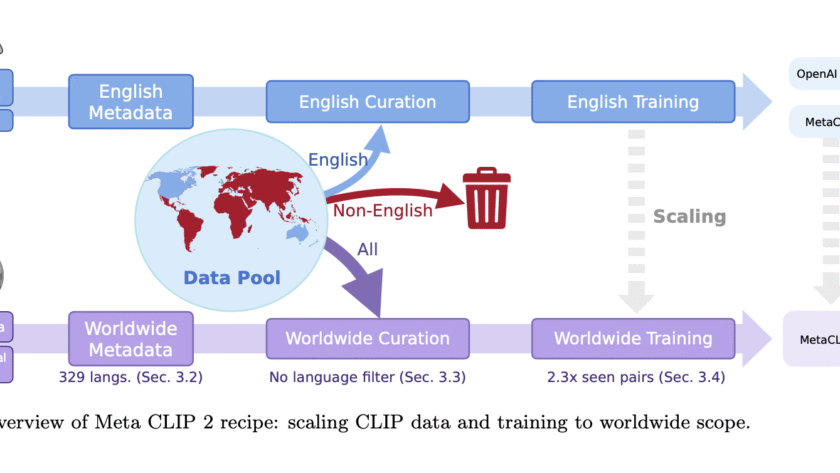
Contrastive Language-Image Pre-training (CLIP) has become important for modern vision and multimodal models, enabling applications such as zero-shot image classification and serving as vision encoders in MLLMs. However, most CLIP variants, including Meta CLIP, are limited to English-only data curation, ignoring a significant amount of non-English content from the worldwide web. Scaling CLIP to include…
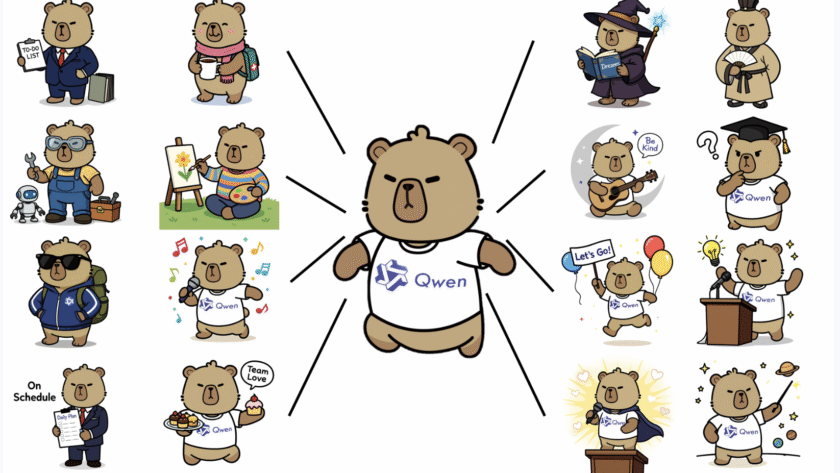
In the domain of multimodal AI, instruction-based image editing models are transforming how users interact with visual content. Just released in August 2025 by Alibaba’s Qwen Team, Qwen-Image-Edit builds on the 20B-parameter Qwen-Image foundation to deliver advanced editing capabilities. This model excels in semantic editing (e.g., style transfer and novel view synthesis) and appearance editing…
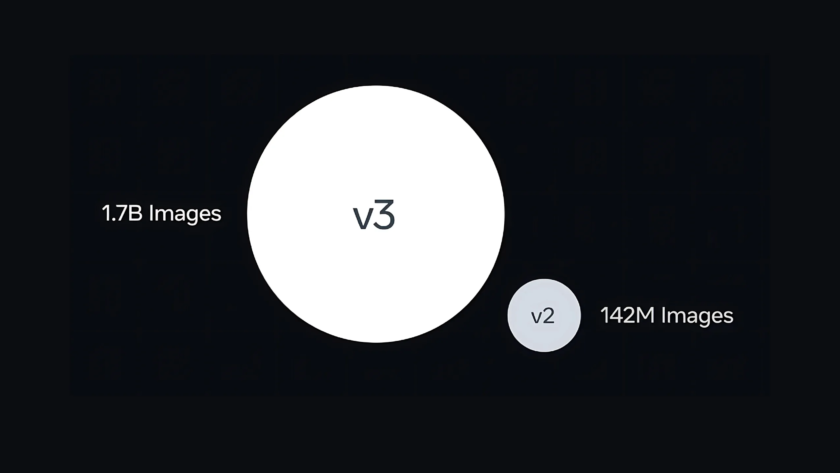
Meta AI has just released DINOv3, a breakthrough self-supervised computer vision model that sets new standards for versatility and…
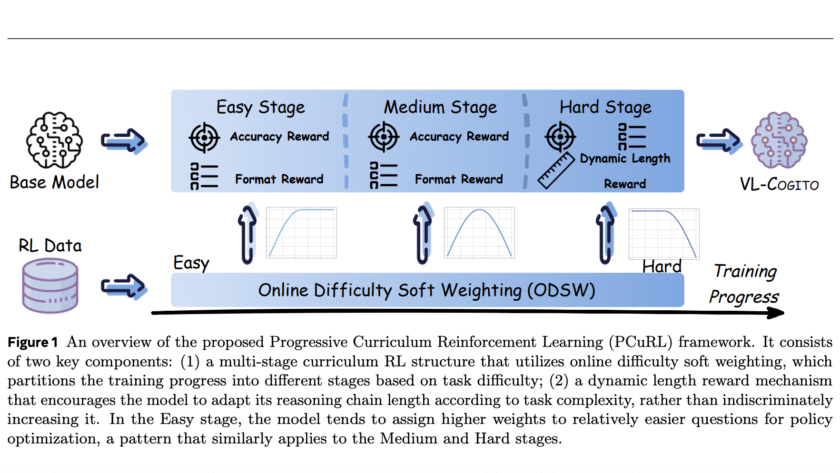
Multimodal reasoning, where models integrate and interpret information from multiple sources such as text, images, and diagrams, is a frontier challenge in AI. VL-Cogito is a state-of-the-art Multimodal Large Language Model (MLLM) proposed by DAMO Academy (Alibaba Group) and partners, introducing a robust reinforcement learning pipeline that fundamentally upgrades the reasoning skills of large models…
Introduction
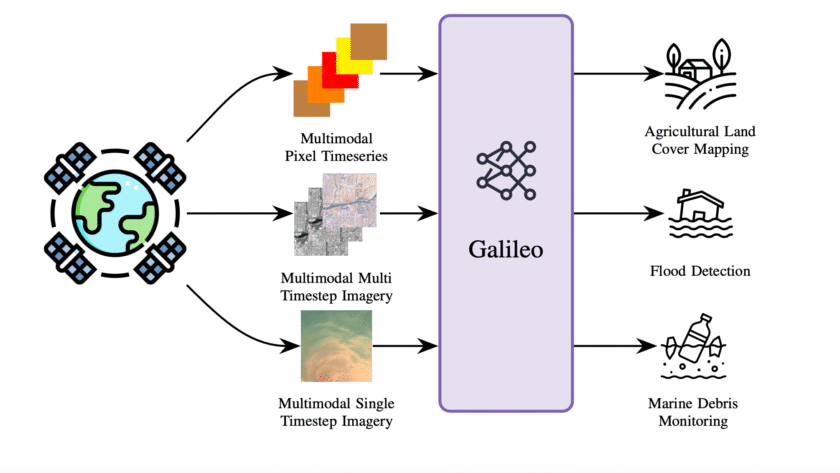
Galileo is an open-source, highly multimodal foundation model developed to process, analyze, and understand diverse Earth observation (EO) data streams—including optical, radar, elevation, climate, and auxiliary maps—at scale. Galileo is developed with the support from researchers from McGill University, NASA Harvest Ai2, Carleton University, University of British Columbia, Vector Institute, and Arizona State University.…