Twenty years ago, translation at Google began as one of our pioneering machine learning experiments to turn the science of language into the magic of human connection. That experiment has come a long way with over a trillion words being translated for billions of users across our products every month. Today, we’re taking our next…
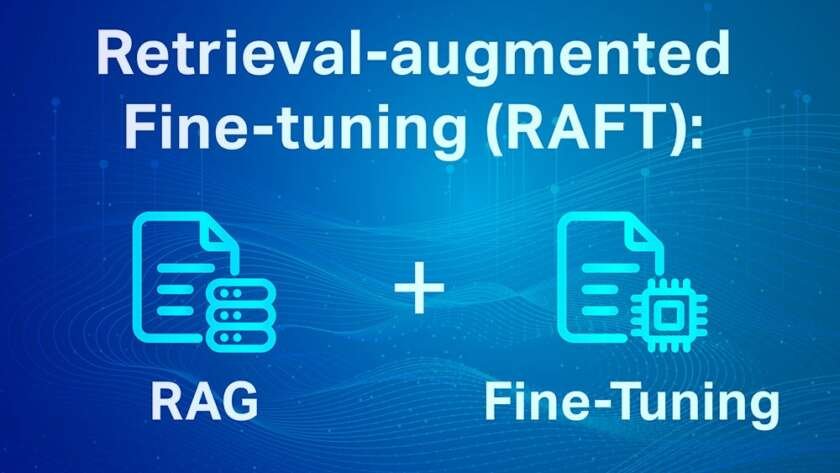
In simple terms, retrieval-augmented fine-tuning, or RAFT, is an advanced AI technique in which retrieval-augmented generation is joined with fine-tuning to enhance generative responses from a large language model for specific applications in that particular domain. It allows the large language models to provide more accurate, contextually relevant, and robust results, especially for targeted sectors…
"Streaming" gets used in two different ways when people talk about AI agents, and most tutorials only build one of them. Sometimes it means the agent consumes a live stream of events instead of waiting for someone to type a message. Sometimes it means the agent's own output streams out token by token instead…
Yesterday, Liquid AI released LFM2.5-VL-3B. It is a 3.1B-parameter vision-language model built for on-device deployment. The model reads digital screens across mobile, web, and desktop. It grounds objects to coordinates, parses documents and charts, and calls tools from text or image input. Liquid AI reports an average of 69.4 across 28 vision benchmarks. That matches…
3.7 Flash shows strong gains over 3.6 Flash in coding tasks like debugging and issue resolution. It also achieves higher first-pass code accuracy and has improved performance in generating production-ready code as seen in FrontierCode 1.1 Main (43.6% vs 34.4%) and DeepSWE v1.1 (65.3% vs 49.0%). In web development, 3.7 Flash generates more functional layouts…
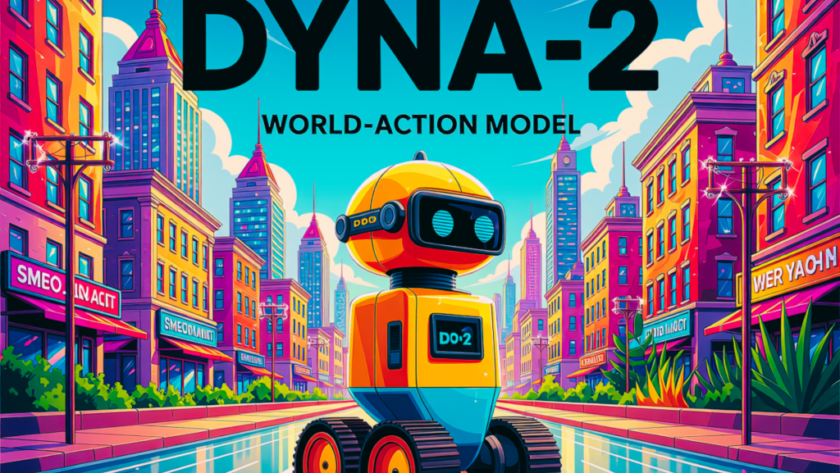
Dyna Robotics has released Dyna-2, a world-action model for robot manipulation. It was pre-trained on more than one million hours of egocentric human video. That is roughly 170 years of continuous waking experience. Robot learning has been bottlenecked by action-labelled data, which teleoperation must deliberately produce. Dyna-2 tests whether ordinary human video can substitute. The…
For years, this has been where you’ve found us — through Medium, whenever we published something worth your time. That’s changing a little, starting now. We’re expanding into a proper newsletter, so expect to hear from us more regularly than “whenever a new post goes up.” If you’ve got email notifications on for this publication, keep an eye on…
The idea that AI agents need ‘eyes’ – real visual information from the real world, and not just paperwork and dashboards, have become a marker of advancement in construction technology. Yet mostly what has been referred to as an “agent” today is not actually acting based on what it sees. It narrates and alerts while…
# Small But Powerful
Running a 70B model in production can be expensive, slow, and, for many tasks, unnecessary. If you're building a focused pipeline like a document classifier or a multilingual support responder, a well-trained 3B model will match or beat the 70B on your specific task at a fraction of the…
In this tutorial, we explore adaptive experimentation using Meta’s Ax with the modern Client API. We work through a complete workflow where we tune a RandomForest model on a synthetic classification dataset while balancing predictive accuracy against model footprint. We begin by defining a mixed search space with integer, float, log-scaled, and categorical parameters, then…