Updated September 17, 2026 Today, we’re introducing two new models that bring advancements in near real-time reasoning to more effectively enable voice agents and make conversing with AI feel more intuitive and intelligent. Gemini 3.8 Live: Built for scale and cost efficiency, combining conversational intelligence with fluid dialogue and visual grounding. Gemini 3.8 Live Extended…
Reward AI, a robotics startup whose team’s prior work includes DexCap, HumanPlus, and ALOHA, has released OM-1, short for Omnibody Model 1. OM-1 is a general-purpose manipulation policy that learns from humans wearing a sensorized glove, then runs on industrial arms and humanoids at human speed. The key findings that stands out: no teleoperation data…
Introduction
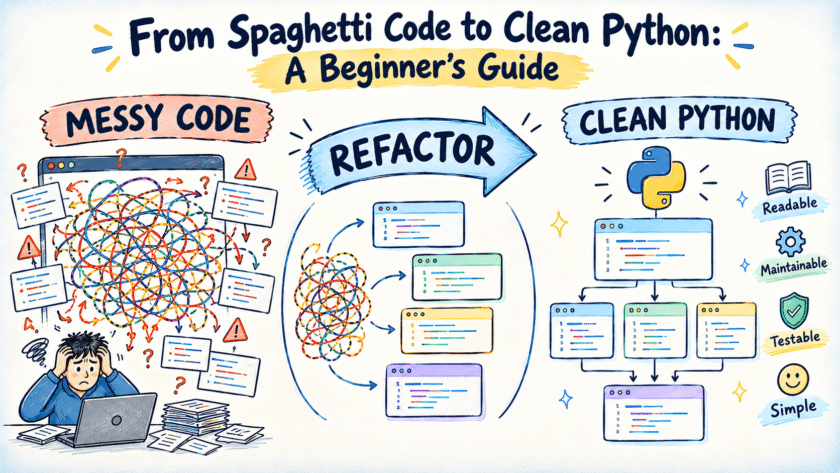
Spaghetti code is hard to work with because its logic is tangled. A function in Python can handle several related steps and still be perfectly readable. Problems start when different responsibilities become tightly connected, dependencies are unclear, and changing one piece of logic requires tracing through unrelated parts of the code.
Breaking code into…
Google DeepMind has released AlphaGenome Atlas, a catalogue of precomputed predictions for the molecular effects of every possible single-nucleotide variant in the human genome. That is roughly 9 billion single-letter changes. The release also introduces the AlphaGenome Variant Impact (AVI) score, a single number that ranks variants by predicted impact, plus per-variant feature attributions and…
Building on the momentum of 3.7 Flash from three weeks ago and marking our third Flash release in only six weeks, today we’re introducing Gemini 3.8, our best reasoning and coding model yet, at the same speed and low cost of 3.7. Gemini 3.8 introduces 2 variants: Gemini 3.8 Flash: our most intelligent workhorse model,…
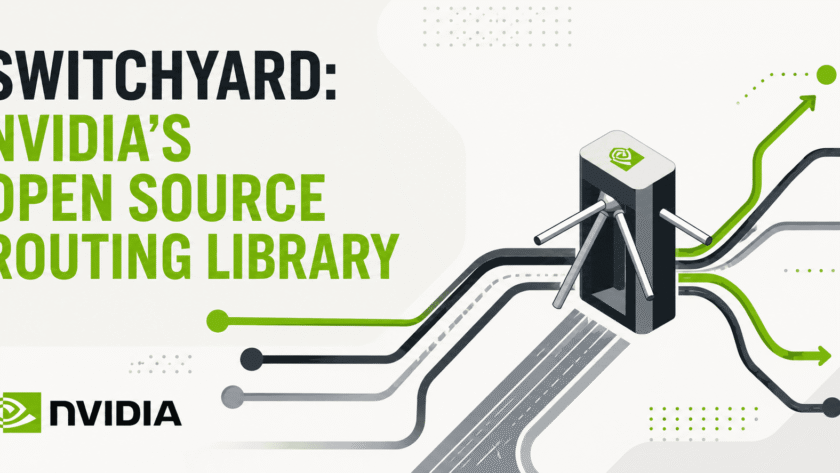
Most production AI agents still send every LLM call to the same expensive frontier model. Classification steps, simple tool calls, progress checks, and hard reasoning all hit the same endpoint. The result is unnecessary cost and latency. NVIDIA NeMo Switchyard solves this.
It is an open-source routing layer (proxy + library) that sits between your…
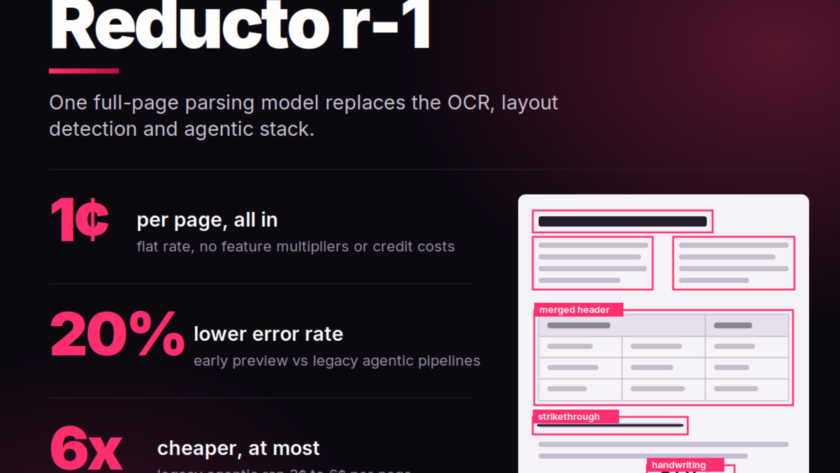
Last week, Reducto announced r-1. It is the first model in a new parsing family built on a rewritten architecture, and it replaces the company’s multi stage agentic OCR with one full page pass. Reducto says r-1 is more accurate than its most powerful legacy agentic models, faster, and up to 6x cheaper.
Is…
Real-world data at continuous global scale WeatherNext 3's biggest leap forward is what it learns from. Most AI weather models, including WeatherNext 2, are trained on data from numerical weather prediction (NWP) models. Although useful, NWP models are complex, supercomputer-driven physics simulations that carry a six-hour data lag. This lag can lead to biases for…
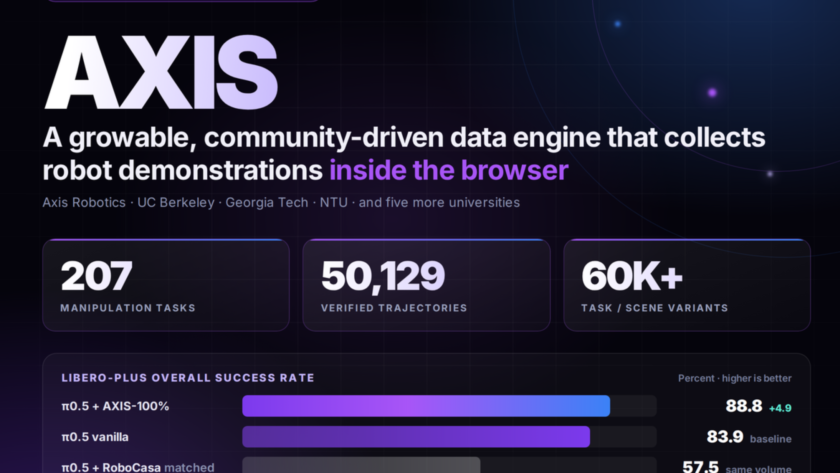
Robot manipulation datasets have grown far slower than the models trained on them, mostly because collection stays closed and centralized. Expert operators gather demonstrations on lab hardware, process them offline, and ship a fixed benchmark that never grows again. A research team from Axis Robotics, UC Berkeley, Georgia Tech, NTU… is proposing a different shape…
The Problem With Static User Profiles
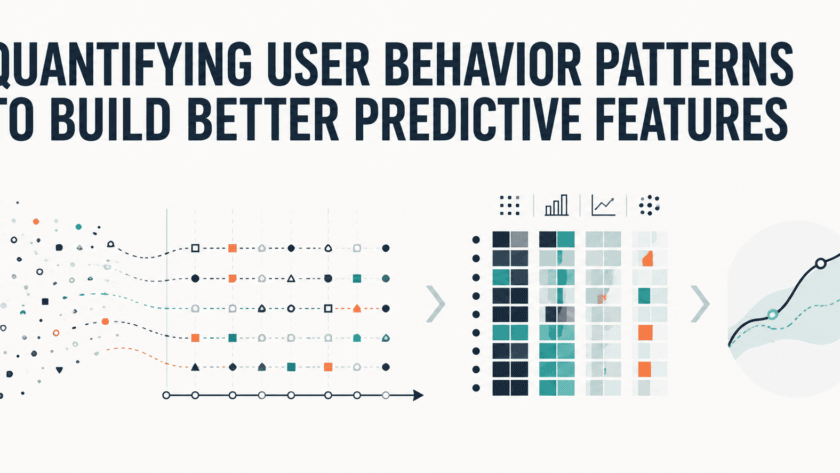
Traditional models treat users as fixed entities, reducing complex decision-makers to demographics and aggregate metrics. Simply knowing that a 35-year-old male in Seattle clicked 12 times last month tells you almost nothing about his intent. These macroscopic features fail to capture the moment-to-moment shifts that signal genuine interest or…